

Automotive Fuel Delivery System Market Size and Trends Expected to Hit USD 9.69 Billion, at 5.90% CAGR by 2026 to 2035
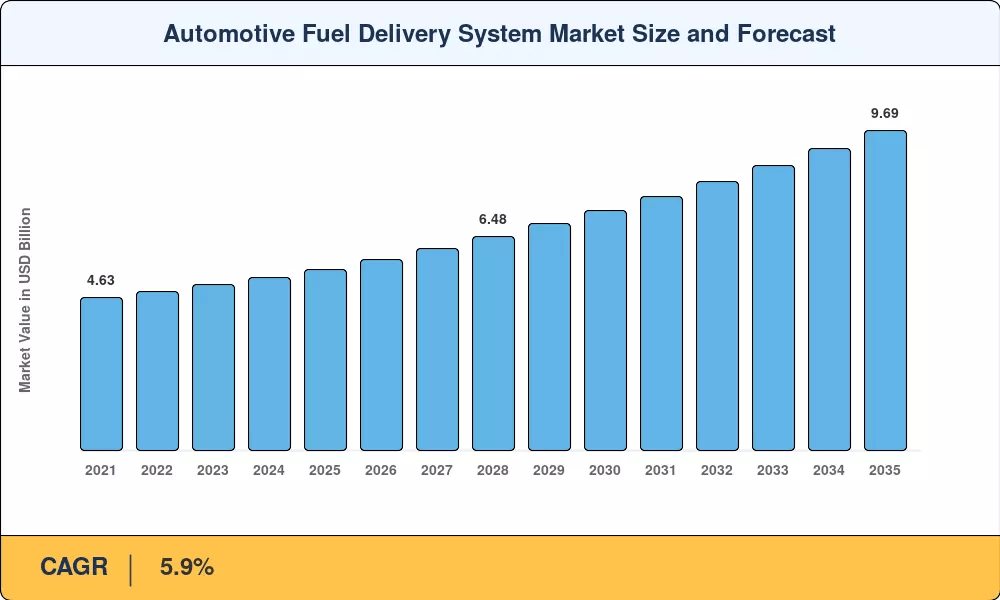
Automotive Fuel Delivery System Market Summary
Asia-Pacific led the Automotive Fuel Delivery System Market with 35.4% share in 2025 and is forecast to register a 7.3% CAGR to 2035.
Fuel pumps accounted for 34.6% of the Automotive Fuel Delivery System Market in 2025, reflecting their role as the highest-value single component in every ICE powertrain.”
NY, CA, UNITED STATES, July 13, 2026 /EINPresswire.com/ -- The automotive fuel delivery system is a critical network of components designed to store, filter, and supply fuel from the tank to the engine's combustion chamber at the precise pressure, volume, and timing required for optimal engine performance. This system encompasses fuel pumps, fuel injectors, fuel rails, fuel filters, fuel pressure regulators, and associated electronic controls that work in concert to ensure efficient fuel atomization, proper air-fuel mixture, and complete combustion. The fuel delivery system plays a fundamental role in determining vehicle power output, fuel efficiency, emissions performance, and overall engine reliability across all internal combustion engine vehicles.— Arti Dhapte
Automotive Fuel Delivery System Market Overview
The automotive fuel delivery system market share is positioned for steady growth through 2035, driven by global vehicle production, the aging vehicle parc in developed markets, and the continued evolution of internal combustion engine technology. The projected valuation of USD 9.69 billion reflects sustained demand across both OEM and aftermarket channels, with advanced fuel delivery technologies capturing an increasing share of market value.
The market is experiencing steady growth driven by several fundamental factors. The expanding global vehicle parc, with increasing numbers of vehicles on roads requiring replacement fuel system components, sustains demand across both OEM and aftermarket channels. Stringent emission regulations worldwide are compelling automakers to adopt advanced fuel delivery technologies that enable more precise fuel metering, improved combustion efficiency, and reduced tailpipe emissions. The global push toward improved fuel economy and reduced carbon footprint is accelerating the adoption of high-pressure direct injection systems and advanced electronic controls. The continued dominance of internal combustion engines, particularly in emerging markets and commercial vehicle segments, ensures sustained demand for fuel delivery components even as electrification progresses.
Industry trends indicate a decisive shift toward high-pressure fuel injection systems capable of meeting increasingly stringent emission standards. Gasoline direct injection (GDI) systems have become mainstream in passenger car applications, while common rail direct injection (CRDI) has become the standard for diesel engines. The growing adoption of turbocharged downsized engines requires more sophisticated fuel delivery systems capable of delivering precise fuel quantities across a wider operating range. The integration of electronic control units with advanced sensors and closed-loop feedback systems is enabling real-time optimization of fuel delivery parameters for maximum efficiency and minimum emissions.
Technological developments continue to advance the capabilities of fuel delivery systems. The development of piezoelectric injectors enables multiple injection events per combustion cycle, improving combustion quality and reducing emissions. The use of advanced materials such as stainless steel, high-grade aluminum alloys, and specialized coatings improves component durability and resistance to degradation from biofuels and alternative fuels. The emergence of hydrogen fuel delivery systems for fuel cell and hydrogen internal combustion engine applications represents a frontier technology with significant long-term potential.
Policy and regulatory influence on the automotive fuel delivery system market is substantial. Emission standards including Euro 6, Bharat Stage VI, China 6, and US EPA regulations require fuel delivery systems capable of achieving ultra-low emission levels. Corporate average fuel economy standards drive the adoption of technologies that improve combustion efficiency and reduce fuel consumption. The European Union's Euro 7 regulation, scheduled for implementation, will require even lower emissions and improved durability of fuel system components. Regulations promoting alternative fuels including ethanol blends, biodiesel, and hydrogen are driving innovation in fuel system materials and design to ensure compatibility and reliability.
The demand outlook for automotive fuel delivery systems remains positive, supported by global vehicle production, the aging vehicle parc in developed markets requiring aftermarket replacements, and the continued evolution of internal combustion engine technology. The Asia-Pacific region dominates the market, driven by massive vehicle production in China, India, and Japan. While the long-term trajectory of vehicle electrification presents challenges, the internal combustion engine will remain dominant for decades, ensuring sustained demand for fuel delivery systems.
📍 Get Free Sample Report for Detailed Market Insights:
https://www.marketresearchfuture.com/sample_request/2193
Automotive Fuel Delivery System Market Segmentation
By Component
The automotive fuel delivery system market is segmented by component into Fuel Pump, Fuel Injector, Fuel Rail, Fuel Filter, Fuel Pressure Regulator, and Others. Fuel injectors represent the largest component segment, serving as the primary precision metering devices that control fuel delivery to the engine. The shift toward direct injection systems has increased injector complexity and value, as these components must operate at extremely high pressures while delivering precisely metered fuel quantities. Fuel pumps, including both electric and mechanical variants, represent a significant component segment, with electric pumps dominating modern applications. Fuel filters ensure contaminant-free fuel delivery, protecting injectors and other sensitive components from damage. Fuel pressure regulators maintain consistent fuel pressure across varying engine operating conditions, critical for precise fuel metering and consistent performance.
By Vehicle Type
Vehicle type segmentation includes Passenger Cars, Light Commercial Vehicles, and Heavy Commercial Vehicles. Passenger cars account for the largest market share, driven by global production volumes and the widespread adoption of advanced fuel delivery technologies. Light commercial vehicles represent a growing segment, supported by e-commerce expansion and last-mile delivery fleet growth. Heavy commercial vehicles require robust, high-capacity fuel delivery systems capable of supporting large-displacement engines operating under demanding conditions. Commercial vehicles typically employ common rail diesel injection systems designed for durability, reliability, and sustained high-pressure operation.
By Fuel Type
Fuel type segmentation covers Gasoline, Diesel, Hydrogen, and Others. Gasoline fuel delivery systems dominate the passenger car segment, with gasoline direct injection becoming the predominant technology globally. Diesel fuel delivery systems maintain a strong position in commercial vehicles and in European passenger car markets, with common rail direct injection technology dominant in diesel applications. The hydrogen segment represents an emerging frontier, with fuel delivery systems for hydrogen internal combustion engines and fuel cell electric vehicles requiring specialized components capable of handling high-pressure hydrogen gas. Other fuel types include alternative fuels such as ethanol blends (E85), biodiesel, and compressed natural gas.
By Delivery Method
Delivery method segmentation includes Gasoline Direct Injection, Port Fuel Injection, Common Rail Direct Injection, and Others. Gasoline direct injection has become the dominant technology for gasoline engines, offering precise fuel metering, improved combustion efficiency, and reduced emissions compared to port fuel injection. Common rail direct injection continues to dominate diesel applications, using high-pressure common rails to supply multiple injectors with precisely controlled fuel quantities. Port fuel injection retains a presence in certain applications, particularly in smaller engines and in markets where cost considerations are paramount.
By Distribution Channel
Distribution channel segmentation includes OEM and Aftermarket. The OEM segment captures the largest market share, driven by global vehicle production volumes and the integration of fuel delivery systems into new vehicle platforms. The aftermarket segment is growing steadily, supported by the aging vehicle parc in developed regions and the regular maintenance requirements of fuel system components, particularly fuel filters and pumps.
By Region
Regional segmentation includes North America, Europe, Asia Pacific, South America, and the Middle East and Africa. Asia-Pacific is the largest and fastest-growing regional market, fueled by massive vehicle production in China, India, and Japan. Europe maintains a substantial share driven by stringent emission standards and a mature automotive ecosystem. North America presents significant growth opportunities driven by high vehicle ownership rates, regulatory compliance requirements, and aftermarket demand.
🛒 You can buy this market report at:
https://www.marketresearchfuture.com/checkout?currency=one_user-USD&report_id=2193
Automotive Fuel Delivery System Market Regional Analysis
North America
North America represents a significant and mature market for automotive fuel delivery systems. The United States dominates the regional market, driven by high vehicle production, substantial vehicle parc requiring aftermarket components, and regulatory compliance with EPA emission standards. The region's strong pickup truck and SUV market sustains demand for both gasoline and diesel fuel delivery systems. Canada's integration into North American automotive supply chains contributes to regional market stability. The aftermarket segment is particularly strong in North America, driven by the region's high average vehicle age exceeding 12 years and consumer preference for regular maintenance. The shift toward gasoline direct injection has been rapid in the region, with most new vehicles now featuring GDI technology.
Europe
Europe is a leader in advanced fuel delivery technology adoption, driven by stringent emission regulations including Euro 6d and the forthcoming Euro 7 standards. The region's strong diesel market, particularly in Germany, France, and Italy, sustains demand for common rail diesel injection systems. The European market is at the forefront of high-pressure fuel system development, with injection pressures exceeding 2,500 bar in advanced diesel systems. The region's emphasis on fuel efficiency and CO2 reduction drives the adoption of gasoline direct injection and advanced turbocharging technologies. Eastern European countries are emerging as important manufacturing locations for fuel system components, benefiting from lower production costs and proximity to Western European assembly plants.
Asia-Pacific
Asia-Pacific is the largest and fastest-growing regional market for automotive fuel delivery systems. China dominates regional production, driven by the world's largest automotive manufacturing base and the rapid evolution of emission standards, including China 6. India represents a high-growth market driven by rising vehicle production, the implementation of Bharat Stage VI emission standards, and the expanding vehicle parc creating aftermarket demand. Japan and South Korea contribute through advanced automotive engineering and the presence of major fuel system suppliers. Southeast Asian countries, including Thailand and Indonesia, are emerging as important production locations for both OEM and aftermarket fuel delivery components. The region's rapid urbanization and rising middle-class incomes are driving vehicle production volumes and sustaining fuel system demand.
Rest of the World
The Rest of the World segment, encompassing South America, the Middle East, and Africa, presents developing market opportunities. Brazil and Mexico lead Latin American market growth, supported by their integration into global automotive supply chains and domestic vehicle production. The Middle East market benefits from high vehicle density, harsh driving conditions, and low fuel prices that sustain demand for gasoline and diesel vehicles. African markets remain nascent but show potential as vehicle ownership rates increase and infrastructure development accelerates. These regions present growth opportunities for both OEM and aftermarket fuel delivery components as automotive manufacturing and vehicle fleets continue to expand.
Automotive Fuel Delivery System MarketCompetitive Landscape / Key Players
The automotive fuel delivery system market is characterized by the presence of several global players competing on technology, quality, and supply chain capabilities. Key companies include Bosch GmbH (Germany), Denso Corporation (Japan), Delphi Technologies (now part of BorgWarner Inc., US), Continental AG (Germany), Hitachi Automotive Systems (Japan), Aisin Seiki Co., Ltd. (Japan), Magneti Marelli S.p.A. (Italy), MAHLE GmbH (Germany), Keihin Corporation (Japan), TI Fluid Systems plc (UK), and NGK Spark Plug Co., Ltd. (Japan).
Robert Bosch GmbH is a global leader in fuel injection technology, offering comprehensive product portfolios for gasoline and diesel applications, including high-pressure pumps, injectors, and electronic control units. Denso Corporation is a major supplier of advanced fuel delivery systems, particularly strong in the Japanese and Asian markets. Delphi Technologies (now part of BorgWarner) has a strong presence in both gasoline and diesel fuel systems with particular expertise in high-pressure direct injection. Continental AG provides advanced fuel system components and integrated solutions for global automakers.
Strategic developments in the market include investments in high-pressure fuel system technologies, the development of hydrogen-compatible fuel delivery components, and the expansion of aftermarket product portfolios. Companies are focusing on innovation in materials, precision manufacturing, and electronic controls to meet tightening emission standards and evolving fuel requirements. Manufacturers are also working to reduce product costs through manufacturing scale and improved production efficiencies.
Market Challenges & Opportunities
Key restraints facing the automotive fuel delivery system market include the rising popularity of electric and hybrid vehicles, which could reduce long-term demand for conventional fuel delivery components. As automakers invest heavily in electric powertrains, research and development budgets for internal combustion engine technologies may be constrained, potentially slowing innovation in fuel delivery systems. Stringent emission regulations require continuous technology upgrades, increasing development costs and manufacturing complexity. The high cost of advanced fuel delivery systems, particularly high-pressure direct injection components, adds to vehicle production costs and may limit adoption in price-sensitive market segments.
Emerging opportunities in the market are diverse. The development of advanced fuel delivery systems for hydrogen internal combustion engines and fuel cell electric vehicles presents a significant opportunity as the hydrogen economy gains momentum. The growing emphasis on fuel efficiency and emissions reduction drives continued innovation in fuel injection technologies. Expansion of the aftermarket segment, particularly in developing regions with aging vehicle fleets, presents substantial growth opportunities. The integration of advanced electronics and sensors into fuel delivery systems creates opportunities for value-added products with improved diagnostics and performance optimization.
Future potential lies in the development of intelligent fuel delivery systems that leverage artificial intelligence and machine learning for real-time optimization of fuel delivery parameters. The expansion of flex-fuel capabilities to enable operation on a wider range of fuel blends, including high-ethanol and methanol blends, presents a frontier for innovation. The convergence of fuel delivery systems with broader vehicle control architectures, enabling integrated powertrain optimization, will create new opportunities for system-level innovation.
To explore more market insights, visit us at:
https://www.marketresearchfuture.com/reports/automotive-fuel-delivery-system-market-2193
The medium-term growth outlook remains positive, supported by global vehicle production volumes, regulatory-driven technology upgrades, and aftermarket replacement demand. Asia-Pacific will continue to lead market expansion, while Europe and North America maintain significant positions through technology leadership and regulatory-driven adoption.
Long-term industry potential extends beyond the current forecast horizon, though the trajectory of vehicle electrification presents structural challenges. The internal combustion engine will remain dominant for decades, particularly in commercial vehicle, emerging market, and heavy-duty applications, ensuring sustained demand for fuel delivery components. Companies that successfully innovate in high-pressure injection technology, hydrogen-compatible systems, and advanced electronic controls will capture disproportionate value in this evolving market. The development of intelligent, connected fuel delivery systems capable of real-time optimization across diverse fuel chemistries will be essential for maintaining competitiveness in an increasingly complex automotive landscape.
More Related Reports from MRFR Library:
https://www.marketresearchfuture.com/reports/rail-wheel-market-32229
https://www.marketresearchfuture.com/reports/automotive-cyber-security-market-2970
https://www.marketresearchfuture.com/reports/solar-vehicle-market-41150
https://www.marketresearchfuture.com/reports/vehicle-networking-market-28002
https://www.marketresearchfuture.com/reports/automotive-steel-wheels-market-23936
https://www.marketresearchfuture.com/reports/automotive-sensor-market-789
https://www.marketresearchfuture.com/reports/automotive-bearing-market-1996
https://www.marketresearchfuture.com/reports/hospitality-robot-market-26539
https://www.marketresearchfuture.com/reports/automotive-tire-market-2253
https://www.marketresearchfuture.com/reports/automotive-brake-fluid-market-7574
Larry Wilson
WantStats Research And Media Pvt. Ltd.
+1 855-661-4441
email us here
Visit us on social media:
LinkedIn
Facebook
YouTube
X
Legal Disclaimer:
EIN Presswire provides this news content "as is" without warranty of any kind. We do not accept any responsibility or liability for the accuracy, content, images, videos, licenses, completeness, legality, or reliability of the information contained in this article. If you have any complaints or copyright issues related to this article, kindly contact the author above.
